The WNBA is navigating one of the most delicate and defining moments in its modern history, a period where progress, patience, pressure, and financial reality are colliding all at once. While fans eagerly await roster moves, draft speculation, and the promise of another electrifying season, the league itself is operating in a space filled with uncertainty. At the heart of this moment is the unresolved collective bargaining agreement, a foundational document that shapes everything from player compensation to working conditions. Yet, despite the absence of a new deal, business has not slowed down. In fact, it has accelerated in ways that are forcing everyone involved to confront uncomfortable questions.
As negotiations between the league and the players’ association extend beyond another deadline, the WNBA has entered what is legally known as a “status quo” period. Under U.S. labor law, this means that while talks continue, the conditions of the previous agreement remain in place. On paper, this allows teams to function normally, including the ability to issue qualifying offers to free agents. In practice, however, the decision to move forward with free agency has introduced a new layer of tension that goes far beyond legal definitions.
League officials have made it clear to team executives that they are permitted to send out free agent offers, even without a new agreement finalized. Over the course of several days, general managers and front-office leaders across all franchises reportedly received direct communication reinforcing this position. The message was straightforward: the league will not pause its operations unless both sides formally agree to do so. With no moratorium officially in place, teams were given the green light to proceed.
This decision has had an immediate and profound impact on players. For months, many athletes have stood united in their push for a new agreement that more accurately reflects the league’s rapid growth and their expanding role within it. Attendance is up. Media coverage is expanding. Star players are drawing national attention and new fans. Against that backdrop, the timing of free agent offers feels significant, and to some, strategic.
For players, seeing real numbers attached to real contracts changes the nature of the conversation. It is one thing to discuss principles and long-term goals in abstract terms. It is another to hear an agent say that a team is prepared to offer a specific salary right now. These offers may not be signed immediately, but their existence alone carries weight. They introduce clarity, temptation, and, in some cases, doubt.
The phrase “money talks” has never felt more relevant. Financial figures have a way of cutting through even the strongest resolve. When players are presented with tangible offers, it forces them to reassess their positions, not necessarily because their beliefs have changed, but because their circumstances demand careful consideration. Professional athletes operate within a limited window. Every season matters. Every decision can have long-term implications.
Agents play a crucial role in this process. Their responsibility is to advocate for their clients, and that advocacy includes explaining how current offers might translate under different future scenarios. A contract presented under the existing framework can be reframed as a preview of what a player’s value could look like if proposed changes to the agreement were accepted. This type of framing does not guarantee outcomes, but it does influence perception.
For example, an offer that appears modest at first glance may be described as significantly more valuable when viewed through the lens of future salary structures. This approach can make players reconsider what they are being asked to turn down and what they might gain by accepting an offer sooner rather than later. It is a powerful tool, and one that adds complexity to an already emotional situation.
Not all players respond to these offers in the same way. Veterans nearing the latter stages of their careers may prioritize stability and security. Younger players, or those still establishing themselves, may see an offer as validation of their progress and potential. Others may view the timing as problematic, interpreting it as an attempt to weaken collective resolve by introducing individual incentives.
The players’ association has voiced strong concerns about this approach. In statements released during the negotiation process, the union has accused the league and its owners of clinging to outdated systems that undervalue player contributions. From their perspective, moving forward with free agency without resolving fundamental issues risks undermining trust and delaying meaningful progress. They argue that the league’s growth should be reflected not only in marketing and visibility, but also in the structures that support the athletes themselves.
Beyond player compensation, there are broader logistical concerns tied to the absence of a new agreement. One of the most pressing issues involves scheduling. Training camps may still be months away, but the work of building a season schedule begins long before players report. Arenas host a wide range of events, from concerts to other sporting competitions, and dates are often reserved far in advance. Without confirmed schedules, teams risk losing access to prime dates, which can impact attendance and revenue.
This uncertainty affects more than just teams and players. Fans plan their summers around games. Sponsors align campaigns with season timelines. Broadcasters coordinate programming months ahead of time. When a league cannot provide clarity, it creates a ripple effect that touches every corner of the business. Each delay compounds the challenge of delivering a smooth and successful season.
From the owners’ perspective, these concerns are not hypothetical. Every unconfirmed date represents potential lost income. If arenas fill their calendars with other events, teams may be forced into less favorable scheduling scenarios. This reality adds urgency to the league’s desire to keep operations moving forward, even as negotiations remain unresolved.
Another dimension shaping this moment is the growing influence of star power within the WNBA. Playing alongside high-profile players can dramatically elevate an athlete’s visibility, opening doors to endorsement opportunities, media exposure, and brand partnerships. For some free agents, the chance to join a team with a major star changes the calculus entirely. A contract is no longer evaluated solely on its base salary, but on the broader ecosystem it provides.
This reality underscores how much the league has evolved. Player value is no longer confined to on-court performance alone. Marketability, fan engagement, and off-court presence all factor into how athletes assess opportunities. For some, accepting a lower team salary may make sense if it leads to greater exposure and long-term financial benefits elsewhere.
Still, these considerations do not erase the core issue at hand. The unresolved agreement remains a source of stress and uncertainty. Players are being asked to make decisions in an environment where the rules may soon change. That uncertainty can be unsettling, particularly for those who feel that the league’s success has not yet translated into equitable treatment.
Unity among players has been a defining feature of recent negotiations, and many remain committed to maintaining that solidarity. However, unity is not a static concept. It must be continually reinforced, especially when individual circumstances vary so widely. The introduction of free agent offers tests that unity by forcing players to confront personal priorities alongside collective goals.
It is important to recognize that choosing to listen to or even consider an offer does not automatically signal a lack of commitment to the broader cause. Athletes are individuals with unique responsibilities, families, and financial realities. Wanting clarity and security does not negate a belief in progress. These truths can coexist, even if they create internal conflict.
For fans, this moment offers a rare glimpse into the complexities of professional sports beyond the game itself. The excitement of free agency often overshadows the difficult conversations that happen behind the scenes. Contracts are not just numbers; they represent livelihoods, futures, and years of dedication. Understanding that context deepens appreciation for the athletes who carry the league forward.
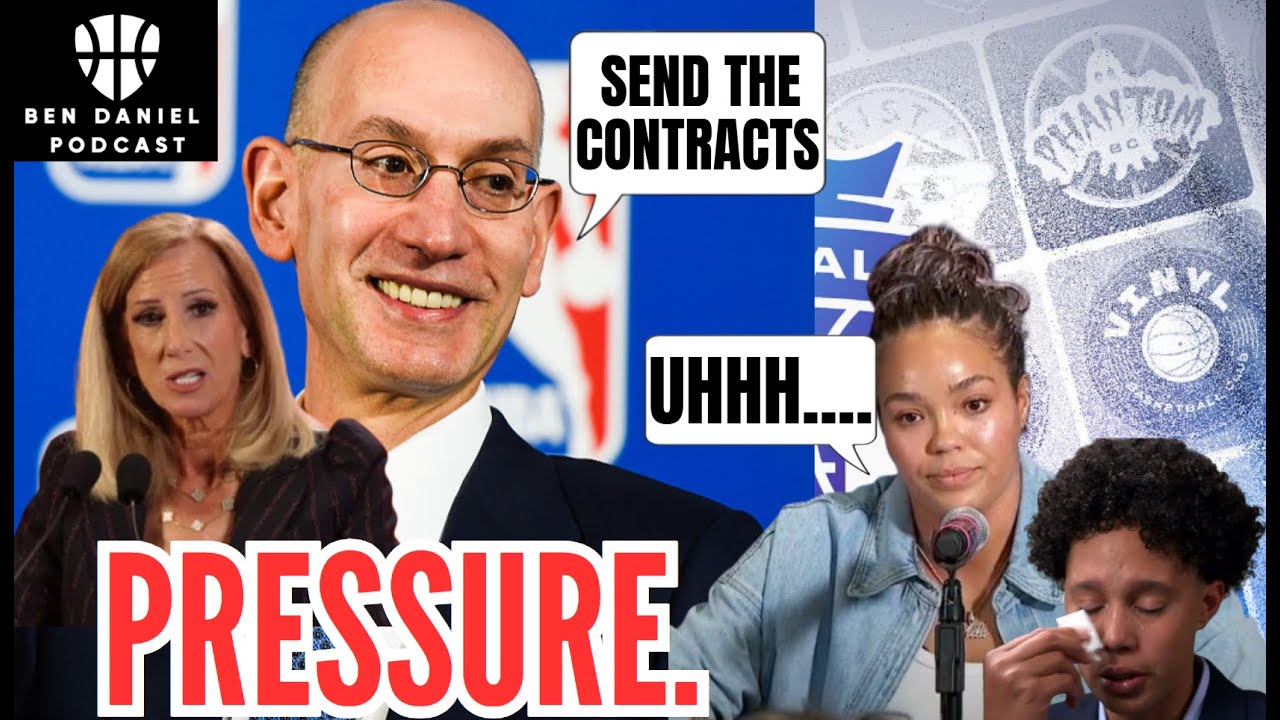
As negotiations continue, both sides face pressure to find common ground. The league’s growth has created new opportunities, but it has also raised expectations. Players want assurance that their contributions are recognized and rewarded. Owners want stability and predictability to continue building the business. These goals are not mutually exclusive, but aligning them requires trust and compromise.
The status quo period is, by definition, temporary. It is a holding pattern designed to keep operations running while solutions are sought. But the longer it lasts, the more strain it places on everyone involved. Each passing week without resolution adds to the uncertainty and heightens the stakes of every decision made along the way.
What happens next will shape not only the upcoming season, but the league’s identity moving forward. A new agreement has the potential to set a tone of collaboration and shared vision. Failure to reach one risks prolonging tension and eroding confidence at a time when momentum should be celebrated.
The WNBA stands at a pivotal point, balancing progress with patience, and ambition with responsibility. The free agent offers being sent today are more than routine transactions. They are symbols of a league in transition, grappling with its own success and the demands that come with it. How this chapter unfolds will be remembered as a defining moment, one that reveals not just what the league values, but how it chooses to move forward together.
As the conversations continue behind closed doors, players, fans, and stakeholders alike are watching closely. The outcome will determine more than salaries and schedules. It will help define the future of women’s basketball, the trust between those who play and those who manage, and the path the league chooses as it steps into its next era.
As the league moves deeper into this uncertain stretch, the conversations happening inside front offices and player circles have grown increasingly nuanced. What began as a procedural decision rooted in labor law has evolved into a broader reflection of how the WNBA defines fairness, timing, and shared responsibility. The continuation of free agency activity without a finalized agreement has become a symbol of the larger negotiation itself—one side focused on maintaining operational momentum, the other determined to ensure that growth is matched by meaningful change.
Inside team headquarters, executives are weighing risks that go far beyond the current offseason. Every offer sent carries implications not only for a single roster spot, but also for future relationships with players and agents. Front offices understand that while they may be acting within their rights, perception matters. How players interpret these moves will influence trust long after the agreement is signed. Teams that are seen as respectful, transparent, and patient may benefit in the long run, while those perceived as overly aggressive risk damaging their reputation among athletes who now have more leverage than ever before.
Players, meanwhile, are having conversations that blend professional strategy with deeply personal reflection. Group chats among teammates and peers have become spaces for reassurance, debate, and sometimes frustration. Some athletes openly discuss the anxiety that comes with waiting—waiting for clarity, waiting for numbers to align with expectations, waiting for a future that feels more secure. Others emphasize the importance of staying united, reminding one another of how far the league has come and how much further it can go with a strong, collective voice.
This internal dialogue highlights a truth often overlooked in discussions about labor negotiations: progress is rarely linear. Moments of advancement are frequently accompanied by periods of doubt and disagreement. The presence of free agent offers during negotiations does not erase the strides players have already made, but it does complicate the emotional landscape. It asks athletes to hold two realities at once—the promise of long-term improvement and the immediacy of present-day needs.
Agents are acutely aware of this tension. Many have taken on a role that goes beyond traditional contract negotiation, acting instead as counselors and interpreters of a rapidly shifting environment. They help players break down not only the financial aspects of an offer, but also its timing, symbolism, and potential consequences. An offer extended now may look very different once a new agreement is reached, and agents must guide their clients through those uncertainties with care.
There is also a growing awareness that this moment could reshape how future negotiations unfold. The outcome of the current talks will likely influence expectations for years to come, setting precedents around transparency, timelines, and the balance of power. Both sides understand that the decisions made now will be referenced the next time an agreement approaches its end. That awareness adds weight to every move, making compromise both more challenging and more necessary.
The role of fans in this process should not be underestimated. As the WNBA’s audience continues to expand, so does public interest in how the league treats its players. Supporters are increasingly informed and engaged, paying attention not only to on-court performance but also to off-court dynamics. Social media has amplified these conversations, allowing fans to express solidarity, frustration, or concern in real time. This public visibility places additional pressure on the league to act in ways that align with its stated values.
Sponsors and business partners are also watching closely. Many have invested in the league precisely because of its reputation for authenticity, resilience, and community. Prolonged uncertainty can make partners uneasy, but it can also motivate them to advocate for resolution. A stable and forward-looking agreement benefits everyone involved, creating an environment where investment feels secure and growth feels sustainable.
Amid all of this, it is easy to lose sight of the human element. Players are not simply bargaining units or line items on a balance sheet. They are individuals who have dedicated their lives to the sport, often navigating challenges that extend beyond basketball. Travel demands, recovery, family responsibilities, and career longevity all factor into how athletes experience this period of uncertainty. Recognizing that humanity is essential to understanding why this moment feels so charged.
The league, for its part, faces a delicate balancing act. Maintaining operations during negotiations is not inherently adversarial, but the timing and communication surrounding those operations matter deeply. Clear, respectful dialogue can ease tension, while perceived indifference can inflame it. As talks continue, there is an opportunity for leadership on both sides to reaffirm a shared commitment to the league’s future.
One of the most striking aspects of this moment is how it reflects the WNBA’s growth. A decade ago, these conversations might have unfolded with far less scrutiny and far fewer stakeholders paying attention. Today, every development is analyzed, debated, and contextualized within a broader narrative of progress in women’s sports. That increased attention is a sign of success, even as it introduces new challenges.
The current uncertainty has also sparked deeper discussions about what success truly looks like for the league. Is it measured solely in revenue and viewership, or does it also include how equitably that success is shared? Can a league truly thrive if those who fuel its popularity feel undervalued? These questions do not have simple answers, but they are central to the negotiations taking place now.
As the status quo period continues, patience is being tested on all sides. Players want reassurance that their voices are being heard. Owners want clarity that allows them to plan effectively. Fans want to know that the season they are looking forward to will arrive on time and with optimism intact. Each group’s concerns are valid, and addressing them requires collaboration rather than confrontation.
Eventually, the talks will lead to a resolution. When they do, the focus will shift back to the court, where the league’s story is most visibly told. But the lessons of this period will linger. How the league navigated uncertainty, how it communicated with players, and how it balanced immediate pressures with long-term goals will all shape perceptions moving forward.
Conclusion:
This chapter in the WNBA’s history is not defined solely by contracts or deadlines, but by a collective reckoning with what the league has become and what it aspires to be. The decision to move forward with free agency amid ongoing negotiations has illuminated both the progress made and the work still to be done. It has revealed a league confident enough to keep moving, yet still grappling with how to ensure that movement is shared fairly.
In the end, the strength of the WNBA will be measured not just by its growth, but by its ability to align success with trust. Reaching a new agreement offers a chance to reaffirm that alignment, setting a foundation that honors players, supports teams, and excites fans. When the uncertainty finally gives way to clarity, the hope is that this moment will be remembered not as a fracture, but as a turning point—one that helped the league step into its future with greater unity, understanding, and purpose.